• Notes from a Quiet Garden
  • Memory's Rucksack
  • Laurie Dennett
  • order the book
  • contact
Menu

waybread

Street Address
City, State, Zip
Phone Number

Your Custom Text Here

waybread

  • Notes from a Quiet Garden
  • Memory's Rucksack
  • Laurie Dennett
  • order the book
  • contact

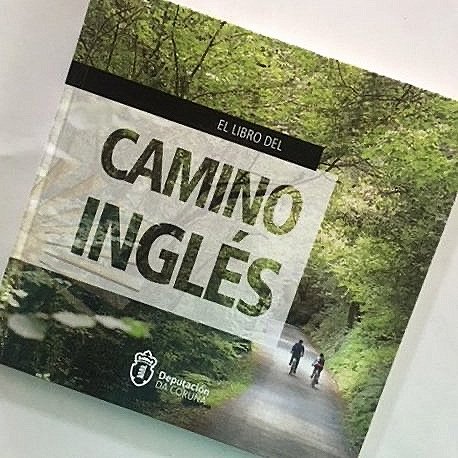
Reviving the Camino Ingles

June 6, 2023 kim narenkivicius

June 2023

This summer marks the twentieth anniversary of a rather special journey along the Camino Ingles. Back in the Holy Year 1993 it was still little-known outside Spain, though its two branches, a longer one from Ferrol and a shorter one from La Coruna, were popular local ways to Santiago. Not surprisingly, the 14 members of the Confraternity of Saint James who walked the shorter route that summer attracted significant media attention, since – as the group’s leader, Pat Quaife, later wrote - ‘We were possibly the first group of pilgrims from the British Isles…to walk the route since the early sixteenth century’.

British devotion to St James the Great, expressed in hundreds of church dedications and place-names up and down the country, became a casualty of the separation of the English church from Rome under Henry VIII. The veneration of saints and relics was suppressed and the practice of pilgrimage died out, but the memory of English pilgrims to Santiago lingered on in Galicia. The name ‘Camino Ingles’ came to be colloquially used to refer to the routes leading from the ports where they had once landed in considerable numbers, especially in compostellan Holy Years.

In 1993, re-enacting the historic pilgrim journey from La Coruna was only part of Pat Quaife’s aim of reviving the Camino Ingles. Her own research, and the example of the Camino Frances, persuaded her that this was possible. Enlisting the organisational help of the Confraternity’s half-dozen Galician members was a first step. As the trip took shape, press releases were sent out from London. The Archbishop of Santiago’s own Holy Year Press Officer agreed to lend a hand. As a result of all this, the Confraternity pilgrims appeared on TV Galega, and in Galicia’s leading newspaper, La Voz de Galicia. Braving atrocious weather, the 14 walkers made their way from Coruna’s church of Santiago to the historic halts of Sarandones, Hospital de Bruma (site of a 12th century former pilgrim hospital), and Ordenes, where they were received by the mayor (a fellow-enthusiast, who had already waymarked his municipality’s section of the route). Once past Sigueiro, the Confraternity pilgrims were soon in the outskirts of Santiago, then making their way to the Plaza del Obradoiro under a banner brought along by a Cornish member of the Bredereth Sen Jago. On the following day, the group received Holy Year certificates (the journey wasn’t long enough for them to be able to claim the compostela) and signed the pilgrim register. Pat later wrote up the journey for Confraternity Bulletin 50, and circulated the news to other European associations

Since then, of course, the Camino Ingles has been well and truly ‘revived’, taking its place among the documented and officially recognised routes leading to the City of the Apostle. Thanks to the strong promotion it now receives, it gets its share of international pilgrims, many of them British. Twenty years on from 1993, I think it’s worth celebrating the journey that began its revival, after nearly 500 years of being all but forgotten outside its immediate area.

Revisiting Rabanal

April 2, 2023 kim narenkivicius

April 2023

April is on the horizon, and with it, the re-opening of Refugio Gaucelmo in Rabanal del Camino. Yesterday, I revisited Rabanal where – as in every year since its inauguration in 1991 - a working party was spending the week running up to 1 April prepatring for a new pilgrim season. I was there for a meeting, but I was aware of the activity going on in the background. Someone was using a sander, someone else was digging over the patio garden, while the smell of paint drifted in through an open window on what was truly a beautiful spring day.

Back in 1991, such basic pilgrim accommodation as there was along the Camino Frances was often called ‘refugio’; the term ‘albergue’ came into use only later, in the mid-1990s, with the increase in numbers and an improvement in the general level of facilities. None the less, with the agreement of both the groups that created it – the UK’s Confraternity of Saint James and the Bierzo’s Amigos del Camino de Santiago - Refugio Gaucelmo has preserved the name it was given by the Amigos. Gaucelmo was a late 11th century hermit-saint who cared for pilgrims, rather like Santo Domingo de la Calzada and San Juan de Ortega farther east. He built a church and hospital for them, places of rest and recovery on the arduous trek through the mountains of Leon. We of the CSJ had not known of him, but were glad of a name so linked to the pilgrimage, so rooted in local history. It was all of a piece with our commitment to rebuilding the ruined parish house as respectfully as possible, using an expert local builder, quality materials and traditional methods.

Coming back to Rabanal is always a pleasure, but yesterday’s visit was particularly so. It wasn’t just seeing Refugio Gaucelmo looking so welcoming and well-cared for, though of course that was part of it. Rather, it was seeing the whole village looking so welcoming and well-cared for. This is a village that is not just surviving, but thriving, a place whose tradition of hospitality finds expression in everyday dealings and conversation, as I noted when I went into a local shop, then into one of the bar-restaurants. This is what Walter Ivens dreamed of, all those years ago, when he spoke movingly about ‘bringing the village back to life’ when it was so depopulated that when he – and I – first saw it in 1986, it had only 16 residents, the youngest 62 years of age. As the 9th halt on Aymeric Picaud’s route to Compostela, Rabanal’s precious commitment to pilgrims comes down to us through the centuries: that’s why it made sense to create ‘refugio’ here back in 1989. But the best part of Rabanal’s story is that while Refugio Gaucelmo may have been a catalyst, the ongoing process of recovery came about, and continues,  largely through the agency of the people of Rabanal themselves.

Historic maps of a Historic Route

November 25, 2021 kim narenkivicius

March 2023

Thirty years have passed since D. Elías Valiña’s last work, his splendid cartography of the Camino Francés, was posthumously published. The very existence of this book is a small miracle, and I can’t think of a better start to Memory’s Rucksack than to share the story of how it came about.

First, let me tell you about those maps. After the landmark Jaca conference in September 1987, D. Elias felt that the ‘movement’ had gained enough momentum to allow him to step back. He then turned to what he saw as an essential task: rewriting the ‘big red guidebook’ of 1985 and creating new maps for it, drawn to scale and in greater detail. In what remained of 1987 and through 1988, he travelled the Camino end to end, walking every metre of it multiple times and conveying every feature of it to paper with meticulous attention. Back in O Cebreiro, the pencilled draft was overlaid with translucent paper, and the maps redrawn in black, green, red and blue inks. The result was a set of 4 maps dedicated to the Camino Aragonés and 25 to the Camino Francés: a Camino captured ‘as it was’, before all the roadworks, deviations and ‘improvements’ that have taken place since. This cartography provided pilgrims with more practical detail, but it was also strikingly beautiful, the lettering precise and clear, the contours of hills truly evocative of hills, the forests made up of countless tiny trees.

Alas, their creator did not live to see the longed-for guidebook become a reality, for D. Elias died in December 1989.  When – two years later - his new Pilgrim's Guide to the Camino de Santiago was published by Editorial Galaxia in five languages simultaneously, the funds available were insufficient to reproduce the maps as he had intended. Other Spanish publishers were canvassed about producing the maps as a separate publication, but to no avail: some pleaded lack of cartographic expertise, while for others, five-colour printing was simply too expensive.

This was a grave disappointment to the friends who had managed to bring the work this far, but they refused to accept it as final. As a last resort the maps were brought to London, where Joseph May (a Confraternity of Saint James member with a lifetime’s experience of the newspaper and printing industries), took one look, pronounced them ‘magnificent’ and agreed to help. After a few false starts we found ourselves at the Brentford printworks of specialist cartographer Roger Lascelles, an engaging New Zealander producing maps and guides for, among others, the Daily Telegraph. He was captivated by Joe's description of the Camino and the pilgrimage (neither of which he had heard of), but what carried the day was Joe’s explanation of the printing processes by which the maps could be reproduced to the highest standard at the lowest unit cost. Roger knew he was hearing this from a pro and so was prepared to take a gamble.

There followed a year of trips back and forth to Brentford, long telephone conversations, endless proof-reading, and for Joe, months of working closely with the printers. The reward was our first sight of the maps, published handsomely as two editions, with introductions in English and Spanish, just as the 1993 Holy Year began. In due course the English edition was reprinted twice and eventually sold out, but D. Elias's family still has plenty of copies of the Spanish one in their shops in O Cebreiro. The Confraternity also has a few, available through the online Shop or the Office.

Roger, Joe and I remained friends, and ten years later we met for a celebratory ‘anniversary’ lunch. Roger still hadn’t broken even, but said he was "proud to have done it, and wouldn't have missed it". Joe grinned and said ‘it was worth every minute, and would have pleased D. Elias’. For me, the cartography remains a portrait of the Camino ‘as it was’ that grows more precious with every passing year. It also bears out my faith in what can be done when people of good will work together to make something worthwhile happen.


Subscribe

Sign up with your email address to receive Laurie’s Notes for the Onward Journey.

Thank you!
← Newer Posts