September 2026
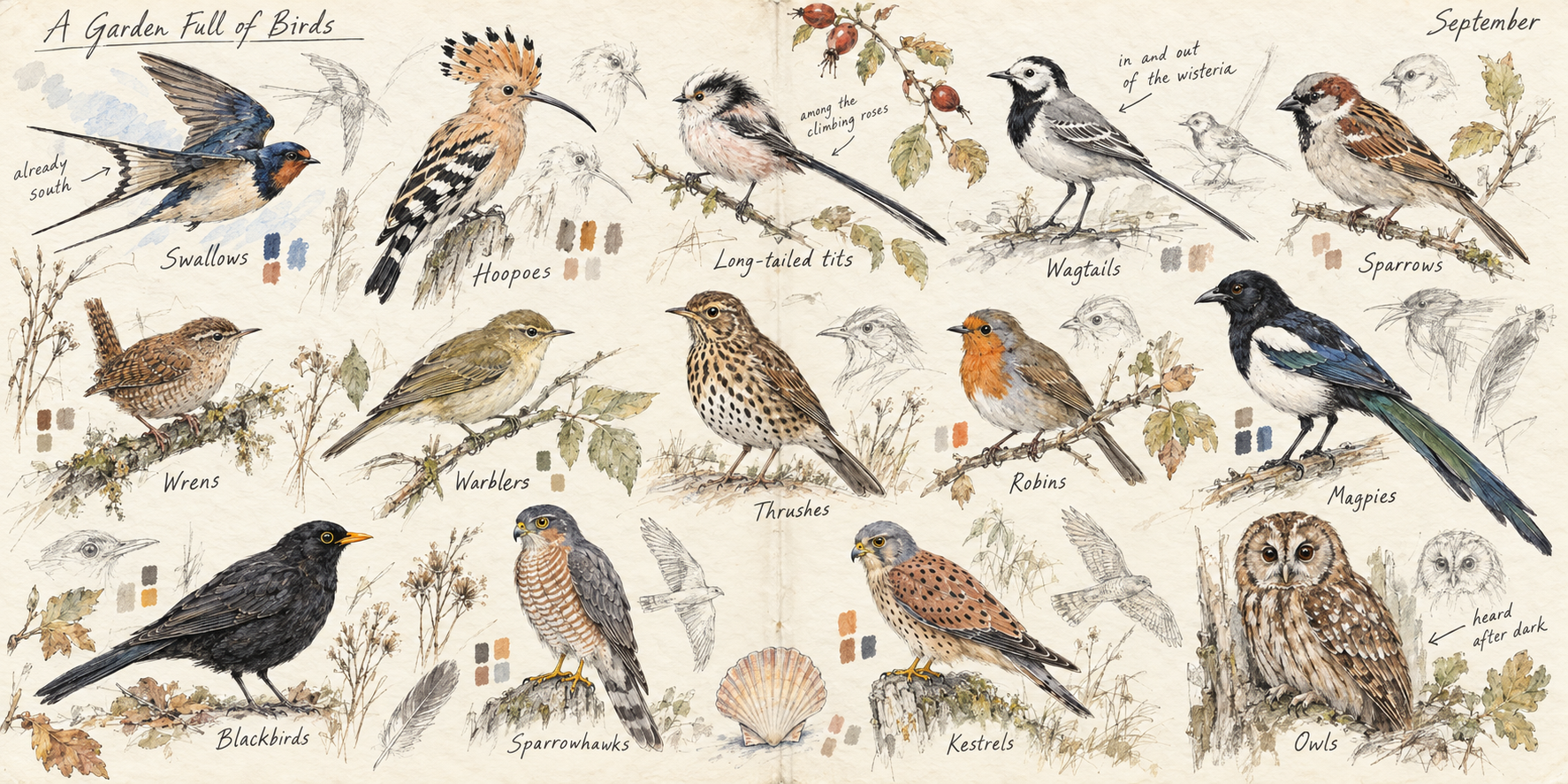
As summer draws to its close, the dawn comes slightly later week by week, and with it, the chorus of birdsong that heralds the new day. Back in May and June, when the birds that frequented the garden were mating and nesting, these musical conversations began at first light and went on for hours, much to my enjoyment. Now they are fewer and shorter, as well as later. The fledglings can look after themselves now, and some of the Quiet Garden’s summer visitors have already left on their migratory journeys: the swallows back to Andalucia, perhaps, or in the case of the hoopoes, even to North Africa.
‘Who’s left?’ I ask myself, sitting outside with a mug of coffee. First to clamour for attention are the long-tailed tits - those tiny acrobats that feed on the fly from the climbing roses on either side of the front gate. Watching and listening to them, and to the wagtails that dart in and out of the wisteria, is non-stop entertainment. For them, of course, the chatter advising others of a good source of food is a serious business, since each must consume its own body weight of insects daily just to survive.
Later in the day come the so-called ‘common or garden’ birds: sparrows, wrens, warblers and thrushes. I disagree with the suggestion that they are unremarkable: not only are they resident here through summer storms and winter gales, but they are also intrepid songsters no matter what is going on, from intense heat and the smoke from forest-fires to hailstones the size of ping-pong balls and driving snow. In a changing climate, temperatures through the year now range from well below zero to the mid 40s, yet through it all the feathered denizens of this garden manage to feed themselves, raise young and educate them to survive, largely through the song that so gladdens human hearts. I give thanks for them: the pair of robins that brighten a winter afternoon, the magpies whose treetop cackle makes me laugh, the blackbirds whose melodious trills can bring an outdoor supper conversation to a halt.
The afternoons here are punctuated by the hunting cries of sparrow-hawks, kestrels and other birds of prey, and the nights by those of owls - never seen, but omnipresent. Truly, the presence of birds is among the greatest joys of living here. People who visit the labyrinth and have time to sit for a while afterwards often remark on how much they’ve enjoyed the birdsong. I like to think that visitors benefit from a reminder that wherever they go next, whatever demands they face, birds are going about their business, bringing us beauty and a quiet sense of well-being, if we will but stop and listen.