April 2026
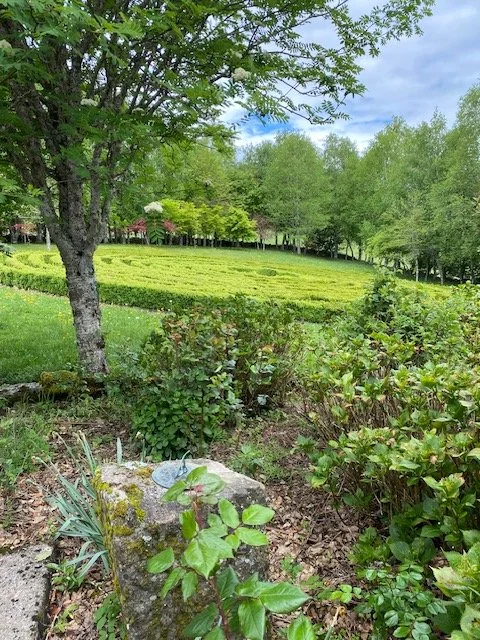
Spring doesn't usually begin so dramatically as it did this year, with a phone call from a visitor to the garden telling me that she thought the labyrinth had box blight. The very words strike terror in the heart of anyone with a box hedge or a much loved piece of topiary, and I am no exception. The labyrinth, some 24 metres in diameter, consists of 1800 boxwood plants belonging to two varieties: buxus sempervirens suffruticosa and buxus microphylla falkneriana. 'No point staying rooted to the spot' I told myself as I shoved the phone back in my pocket: 'get out there and have a look'.
As luck would have it after such a bombshell, it was a chill, rainy day. Out I went, picking up a flashlight on the way, even though it was only noon. What I hoped not to see were the telltale spores and discolouring of fungal box disease, or the white larval webs of the dreaded box caterpillar. The former can be controlled by repeated chemical spraying, but an infestation of the latter can kill a box hedge in a matter of days. So far Galicia has suffered relatively little from these pests, but incidence in this mountain area has grown with climate change and I'd recently heard of a case only a few kilometres away.
My caller hadn't mentioned where she'd seen whatever had prompted her to call me, so I relied on guesswork. The land where the labyrinth is slopes very gently from west-northwest to east-southeast, so I headed for the lowest point on the labyrinth's outermost circle as the area most open to the prevailing winds, and the most likely, I thought, to reveal any traces of disease. The view across the valley from there is usually spectacular, but on this particular day it was shrouded by mist. I turned my back on it and bent to look closely at the hedges in front of me.
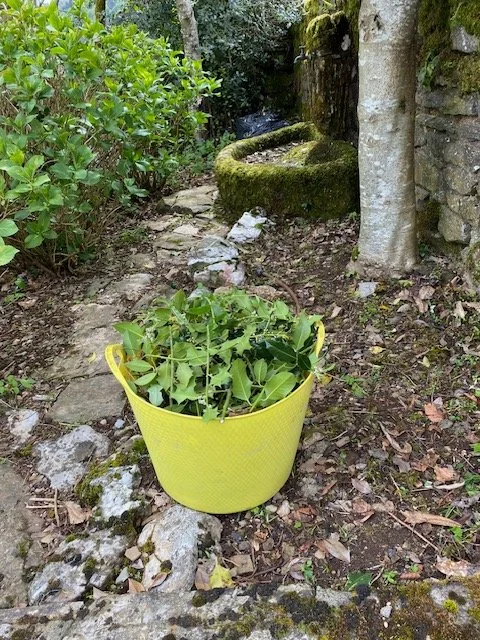
Everything needs tidying after a hard winter

A few bedding plants - and who can live without basil?
I saw no discolouring or wispy webs, but there was, indeed, a spot in an adjacent row of hedging that was bare of leaves, and another a few metres away. I spotted a third one a few rows in - but they were bare, I suddenly recalled, because growth in the winter of 2024 been so exuberant that the whole labyrinth had needed a drastic trim, with the result that some small areas had been all but shaved to keep the path widths even. I hadn't been happy about them, but now, as I peered at the base of the nearest bald spot, I saw that leaves were sprouting, fresh and vibrant. I climbed over the hedge to look closely at the other places where the plants' twiggy interiors lay exposed to view. At the base of each, the bright green of new growth affirmed health and vigour. I drew a deep breath of relief: what my caller had taken to be damage caused by blight or predatory bugs had been made by my occasional gardener's electric saw, and the labyrinth itself was repairing it.
Back in the kichen, I hung up my wet coat. Even after a false alarm, it won't do to be complacent, so I took out my phone to order some insecticide containing bacillus thuringiensis, the best antidote to box diseases and predators yet devised. I've also vowed to be more vigilant.
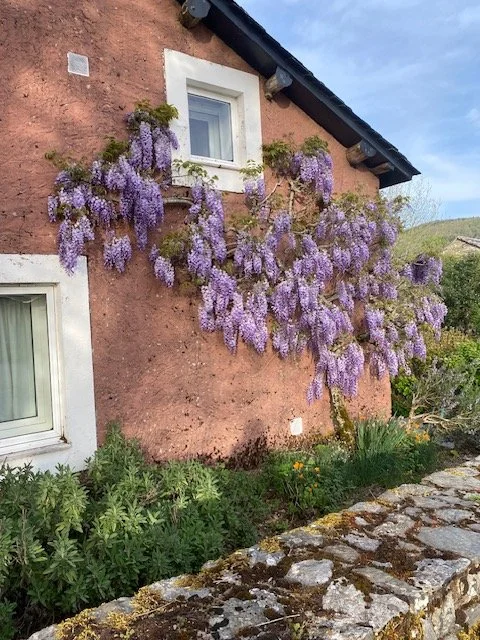
The wisteria at its best, a week after Easter