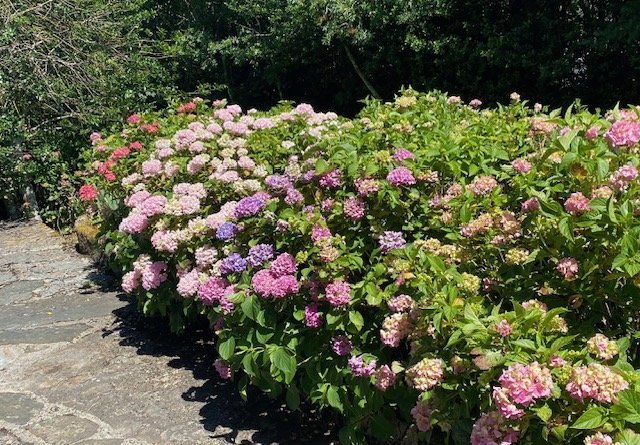
June 2026
The effects of climate change are now reported daily in press and media, but even were they not, those of us who garden would be well aware of them. Here in La Laguna, where gardening at 1200 metres presents its own challenges, what used to pass for normal conditions are subtly altering. I've kept a Gardening Journal since I moved here in 2010. It's lovely, of course, to read about the golden Novembers, but positively scary to recall the June frost of 2017 that decimated everything - not just here, but in the entire region.
These were singular events, but I now reread the journal with a view to trends. On the evidence of my notes on late frosts, the dates when the roses and hydrangeas flowered, and those of the first and last vegetable harvests, I conclude that what I'd once have called 'Spring' is arriving later, and 'Autumn' lasting longer, than either did 15 years ago. In 2011, for instance, I sowed the veggie patch in the first week of May. This year, given that May was so cold and wet, no seeds went into the ground until early June. Similarly, in earlier years the hydrangeas were in full bloom by mid-June, whereas this year, again because of cold, wet conditions, the nascent pale green flowerheads are only now taking on colour, as the month draws to a close.
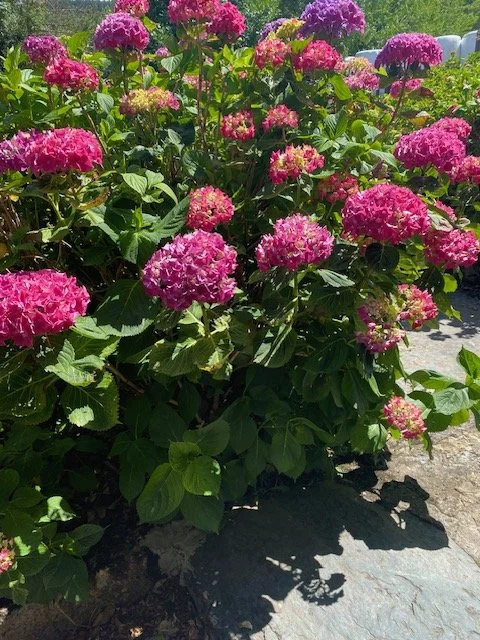
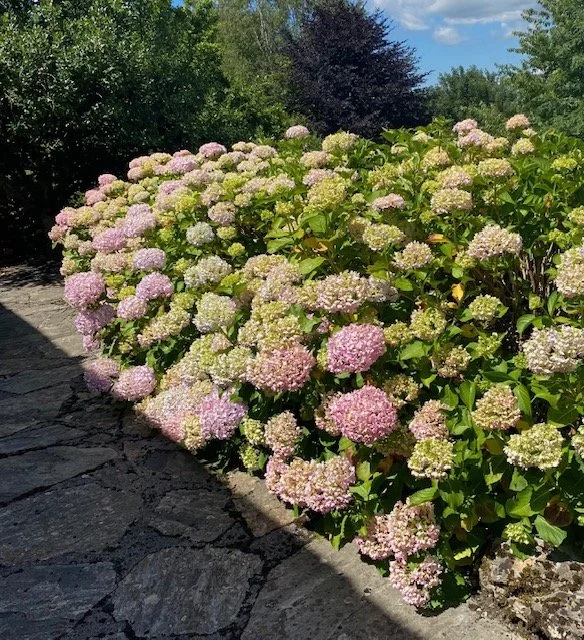
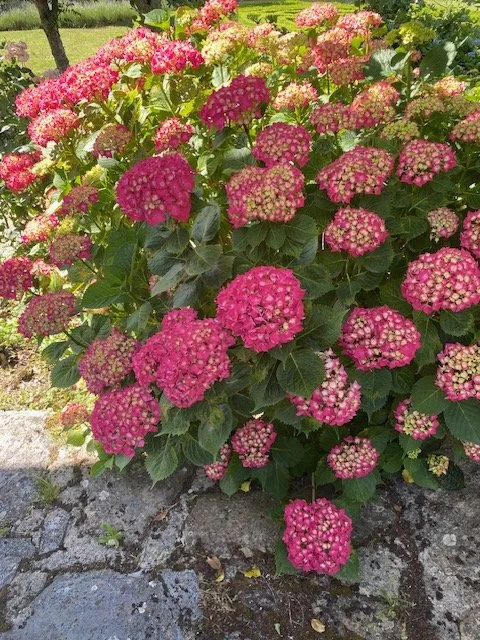
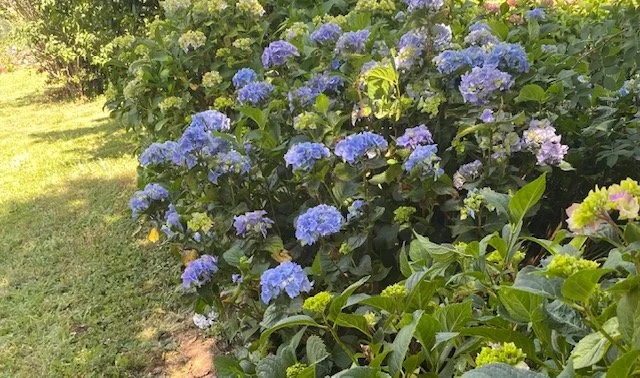
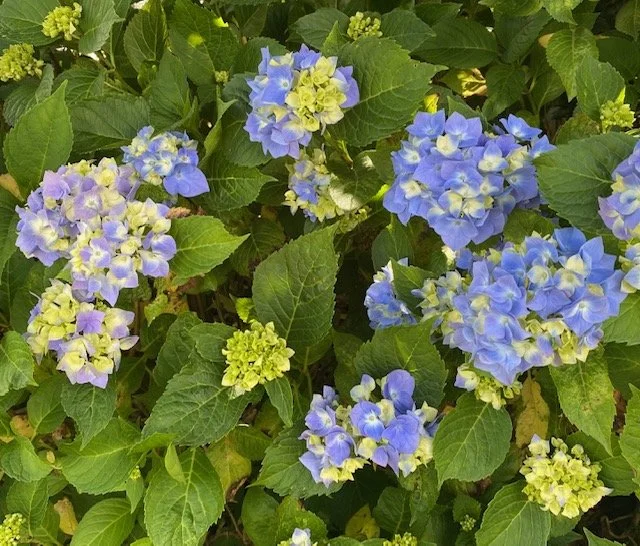
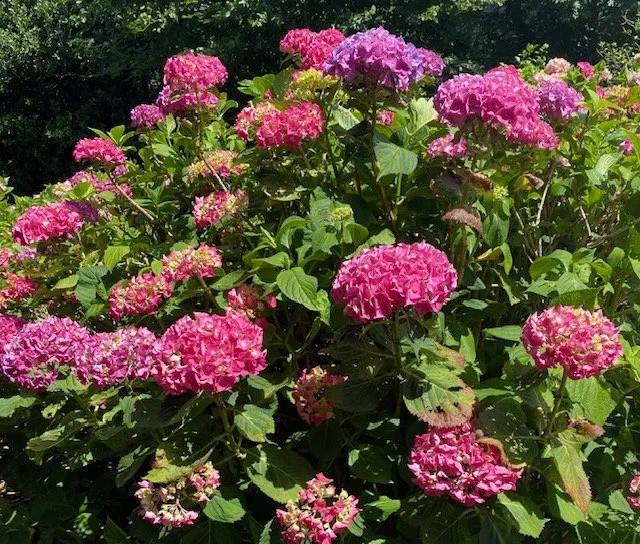
Be all that as it may be, it's a joy to see the variety of hues now emerging. After such a long and arduous introduction to the growing season, many of this year's flowers are quite small, but their ability to gladden the eye is undiminished. Visitors sometimes ask 'what I give them' to influence their colours, and the answer is 'nothing'. The hydrangeas - like the roses, the strawberries and the garden veg - each receive a handful of granular fertiliser based on chicken manure as soon as the weather allows, but nothing more. Whatever colours they present to the world are achieved without any further input from me. Even stranger is the change in some groups of them between one year and the next, again without any chemical intervention. In one particular area, many that were once pink are now deep blue. In another spot, some that were blue are now mauve or fuschia. Whatever is going on in the soil to produce these variations can have nothing to do with climate change, and I am at a loss to explain them. All in all, the hydrangeas 'en masse' (there are 180 of them) present a display that may not be predictable or even explicable, but which always announces the arrival of Summer.