May 2026
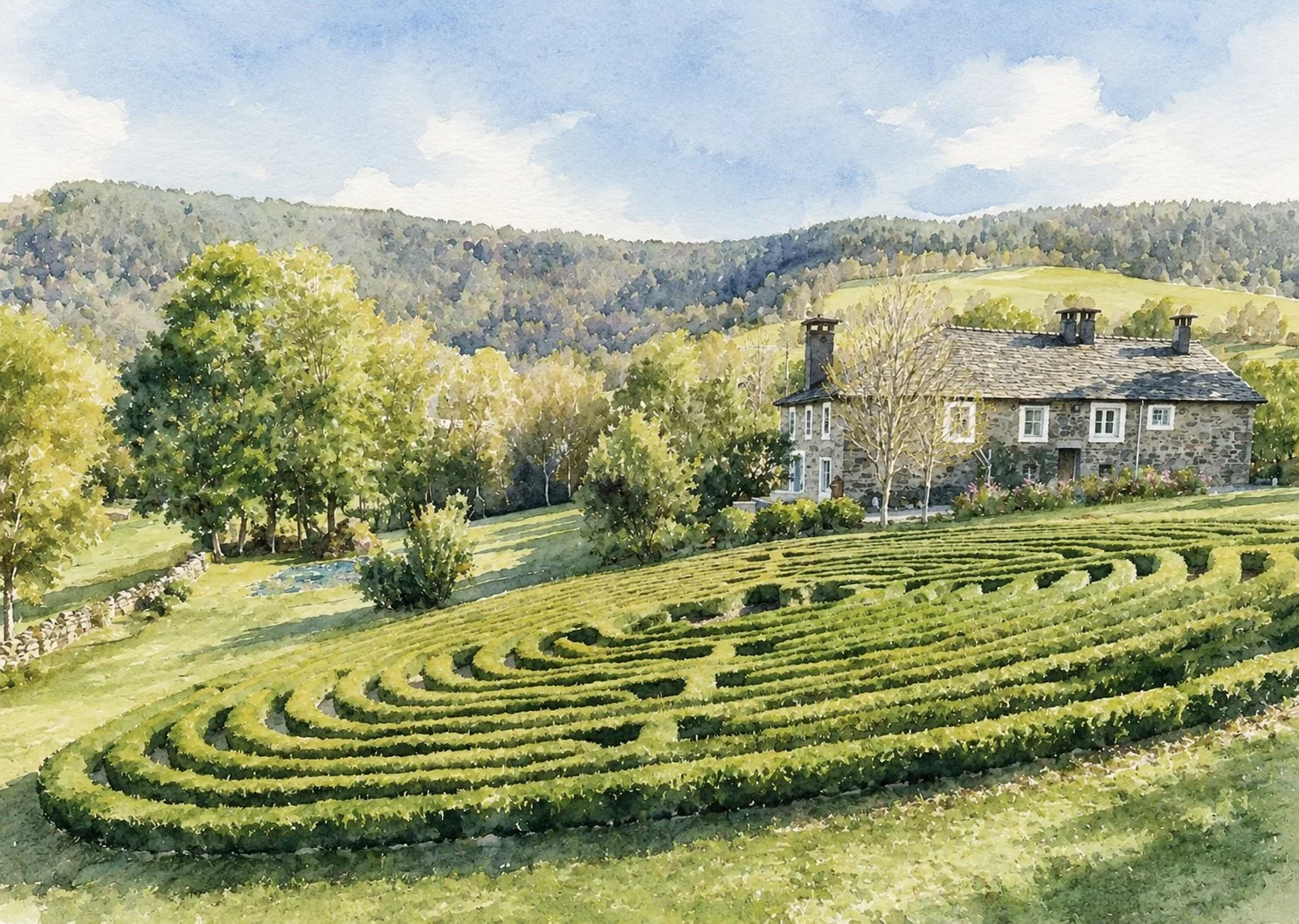
This part of the province of Lugo is known as 'la Alta Montana': a mountain area that's green all year round, thanks to abundant rainfall and the mixed forests that cover so much of it. Pilgrims often comment that it looks more like Ireland than what they'd expected of Spain, and I can only agree. It's not just the vibrant green of hills and valleys; it's the ancient field system, and the way the villages - many consisting of only two or three farmsteads - are linked by foot and cattle paths across the pastures as well as by a single precipitous road.
I've come to love not only the beauty of the surrounding landscape, but also my restored Galician farmhouse, and the curious features of it that the previous owners had the wisdom to retain. Nobody really knows how old it is, but a few generalisations hold true, however ancient it may be. Families on the whole were large in days gone by, so the places where people spent time together, such as the kitchen, tended to be enormous, as is this one. Upstairs, the bedrooms, where warmth was paramount during the harsh winters, were numerous and comparatively small.

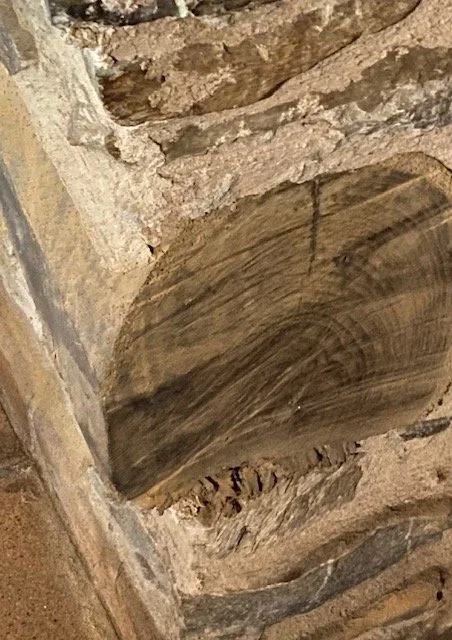
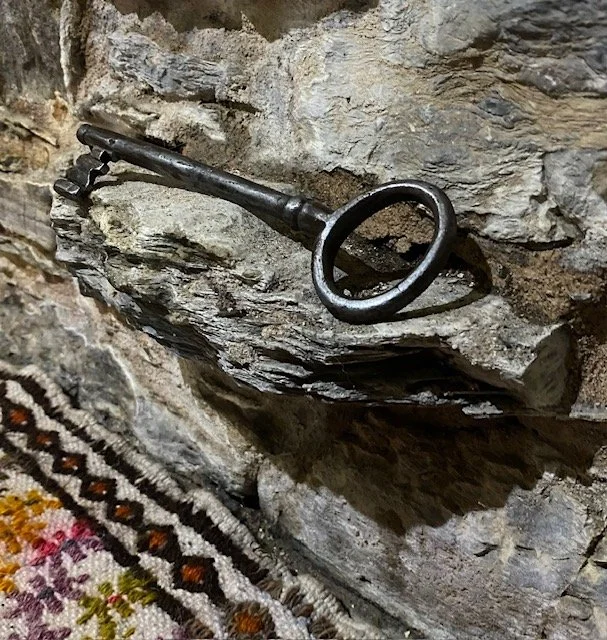

Like all the houses in these parts, mine is built of individual chunks of limestone, slate, and granite, whose varying sizes, shapes, and colours complement one another in strength and visual effect. In places the walls are a half-a-metre thick. That means that the house holds the heat in winter and remains cool in summer, and that its windows have sills deep enough for large plant-pots. Some interior walls have single or double niches that once served to hold candle-sticks, books or ornaments. I too use them that way, moving bits of memorabilia around, according to the seasons. There are two walls, one in the kitchen and one at the entrance to the living-room, into which sections of tree-trunks have been incorporated. Why not? I asked myself, when I first noticed them: they add stability, and as curiosities that amuse visitors, take some beating. Here and there around the house, handy little shelves have been created by allowing particular stones to project at right angles from the surrounding walls. There's one such shelf just inside the front door, ideally placed to hold the 8 inch-long door key, made long ago by a blacksmith. The wooden stable-door may soon need replacing, but that hefty key could go on forever.
Finally, I must mention the house bell - and I don't mean a chiming door-bell, I mean a proper bronze bell with a clapper, almost too heavy to lift. In times gone by, every rural dwelling had one, hanging on a rope or chain near the entrance. It was rung in case of fire or accident, in an era when distance and isolation meant that neighbours depended, first and foremost, on one another. The ring of the house bell is incredibly loud. I've never rung it more than once for fear of causing alarm, but I'm sure that if I did, it would summon people from the other side of the valley. It's a handsome object, none the less, and I'm glad to have it.